


The Diaconate
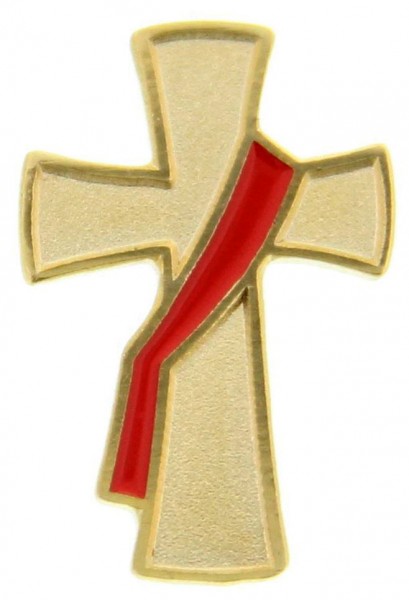
What is the diaconate?
The Diaconate is as old as the Church and was instituted by the Apostles. The terms" Deacon" and "Diaconate" derive from the Greekword diaconia, which means service or ministry. Men who answered the call to serve the church as deacons assisted priests in a variety of ways but did not necessarily continue on to become priests. There were numerous deacons in the early Church, however, over the centuries, the permanent Diaconate disappeared and the Diaconate became only a transitional state into which a man was ordained prior to being ordained to the Priesthood.
The transitional Diaconate is still part of formation for priesthood. Men in seminary formation are ordained as Deacons, and they serve as Deacons prior to Priestly ordination, hence a transitional state. The Diaconate was restored as a permanent order as a part of the church renewal of the Second Vatican Council or Vatican II, in the document titled “Dogmatic Constitution of the Church”. The Council fathers ratified the principle to renew the diaconate, in November 1964, when the Vatican II document, Lumen Gentium was promulgated, and those principles were included. The canonical norms for the permanent diaconate were established on June 18, 1967 and on June 17, 1968 the new rites of ordination of deacons, priests, and bishops were issued. On August 15, 1972, Pope Paul VI issued an apostolic letter containing the norms for the order of deacon.
The first permanent deacon in the Archdiocese was ordained to the Diaconate on June 9, 1974, followed by a second deacon on June 8, 1975, and a third deacon on Dec. 20, 1975.
Deacons in the Archdiocese of Halifax-Yarmouth
There are 39 permanent deacons in the Archdiocese of Halifax-Yarmouth. Their primary role is to be of service within the community according to their talents and gifts. Twelve permanent deacons are assigned to varies parishes in the Archdiocese. They all serve in a variety of ways which include, but are not limited to: ministering to groups outside the parish (fire department and seafarers) formation of ministries within the parish, support of couples in marriage preparation, leading RCIA, formation of prayer and study groups, teaching, presiding at baptisms and funerals, witnessing marriages and assisting at Mass.
There are 19 permanent deacons beyond the retirement age of 75 years (canonical retirement age), some of whom, continue to serve their parishes. In addition, some deacons serve as Chaplain to the HRM Fire Department, The Ecumenical Council etc. in addition to their parish ministry. While 8 deacons are on leave for a variety of reasons.
Recently the Archdiocese of Halifax-Yarmouth has joined with the Dioceses of Antigonish, Grand Falls NFLD, and St. John, NB, to form the Atlantic Diocese Diaconate Formation Program. (ADDFP). At present there are 12 men completing their formation toward ordination in 2027.
Want to learn more about the Diaconate in the Archdiocese of Halifax-Yarmouth?
Contact our Director of Deacons and Formation, Deacon Robert Doyle at
